
While many businesses are focused on day-to-day operations, a significant shift is taking place behind the scenes that will impact systems companies, fabricators, glass processors, installers and the wider supply chain for years to come.
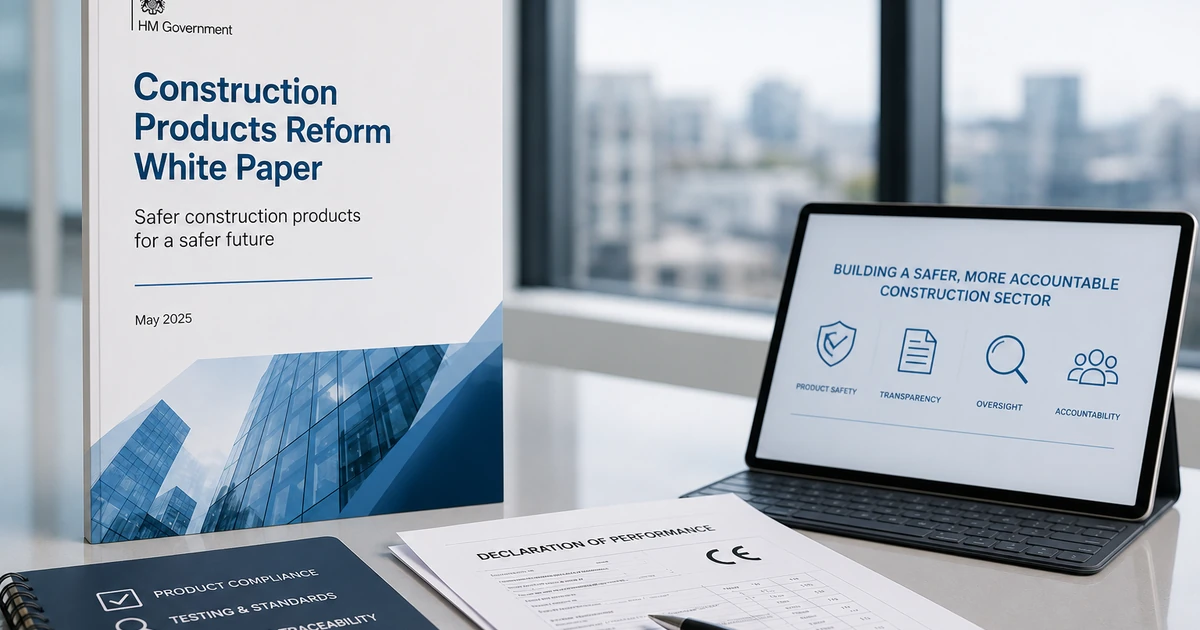
The Construction Products Reform White Paper, published earlier this year, sets out the government's direction of travel for improving product safety, strengthening oversight and increasing accountability across the construction sector. The message and goal however is a simple one, “safe products used safely”.
For John Mannell, Technical Officer and Training Manager at the Glass and Glazing Federation (GGF), the changes represent far more than a regulatory update.
"This has massive ramifications for our sector and will really impact not only how products are tested, but how information relating to those products moves throughout the supply chain," he explains.
While product compliance has long been a requirement, there is now a greater focus on ensuring information follows products from manufacture through to installation and beyond.
This means businesses will increasingly be expected to demonstrate that products meet the relevant standards and that evidence is readily available when required.
According to John, one of the biggest changes is the growing emphasis on product-specific competence.
"In recent years, we have often viewed competence through job roles and functions," he says.
"I think that is beginning to change. There is now much greater emphasis on understanding the products being used, how they should be installed and what evidence exists to support their performance."
The reforms also introduce a greater focus on products that sit outside designated standards through the proposed General Safety Requirement.
While this may sound technical, the practical impact is simple. Risk associated to products will need to be assessed, and businesses will increasingly need to understand the products they use and are suitable for their application.
For installers, this could represent a significant shift.
"Personally, I think there is a massive onus on installers," says John.
"If you are supplying a product to the market, you need to ensure that it conforms with the relevant standards."
While responsibility has always existed, John believes the difference is the introduction of the Single Construction Regulator. This will reduce the fragmented system we have seen in the past, and allow for greater oversight on compliance and ability for enforcement where necessary.
"The liability has always been there," he explains.
"What is changing is the framework around it and the ability to ensure safe products are being specified, supplied and installed correctly."
One of the key messages for businesses is not to wait for new legislation before acting.
Instead, organisations should begin reviewing the information they already hold and ensuring product claims are supported by evidence. With around 94% of the UK construction product manufactures being small or micro businesses, this represents a significant challenge and as a result this is something businesses should be looking at now. "Review your website, your brochures and the products you supply. Make sure that any performance claims are supported by the evidence required."
As the industry prepares for future reform, businesses that take a proactive approach today will be best placed to navigate the changes ahead.
The direction of travel is clear. Greater transparency, stronger evidence and improved accountability are becoming increasingly important across the construction products sector.
For businesses across glass and glazing, preparing now could make all the difference.
For more information visit ggf.org.uk