
As AI and digital tools gain traction in modern window and door manufacturing, Emplas is blazing a trail with its use of smarter systems to improve service, safety and consistency. We report.
As manufacturing continues to evolve, the role of data and digital technology in window and door fabrication is becoming impossible to ignore. Across the industry, manufacturers are moving away from traditional reactive processes and towards smarter, data-led operations that improve quality, efficiency and consistency.
From machine performance and production throughput to operator interactions and product movement across the factory floor, manufacturing data now plays a central role in understanding how a business operates and where improvements can be made.
For national, multi-award-winning fabricator, Emplas, the focus is not simply on collecting information, but on using it effectively.
“At Emplas, it’s all about managing information and creating reports which are utilised by different departments to help make informed decisions,” says Dawid Hajduk, Operations Support Leader, Emplas.
With this information-led approach, Emplas is able to build a clearer picture of how products move through manufacturing and where efficiencies can be gained. Through over 120 scan stations positioned across the factory, the business can monitor where frames travel, which machines they pass through and who has handled them during production. The result is improved traceability and invaluable operational insights.
“We collect a lot of data telling us where frames and products have travelled throughout the factory, who’s touched them and what machines they’ve been on,” says Dawid.
“I feel like AI will transform manufacturing in terms of being able to access and analyse data a lot better, provide smarter solutions and generate ideas which people or teams might not think of themselves,” Dawid adds.
While artificial intelligence is still emerging within the fenestration sector, its potential within manufacturing is significant. Rather than replacing people, AI gives teams the ability to process large amounts of information far more quickly and identify trends, bottlenecks or opportunities that may otherwise go unnoticed.
For Emplas, the practical applications are already in progress. Internal systems and digital tools are being developed to streamline reporting, improve workflow visibility and replace slower manual processes.
This shift from manual reporting to smarter dashboards and automated systems is helping departments access information quicker for a faster response. Instead of waiting for problems to occur, manufacturing teams can identify patterns early, anticipate issues and refine processes to improve performance.
Smarter manufacturing also plays a critical role in product quality and safety, as Emplas’ use of documented control tooling technology, adapted from the automotive industry, demonstrates.
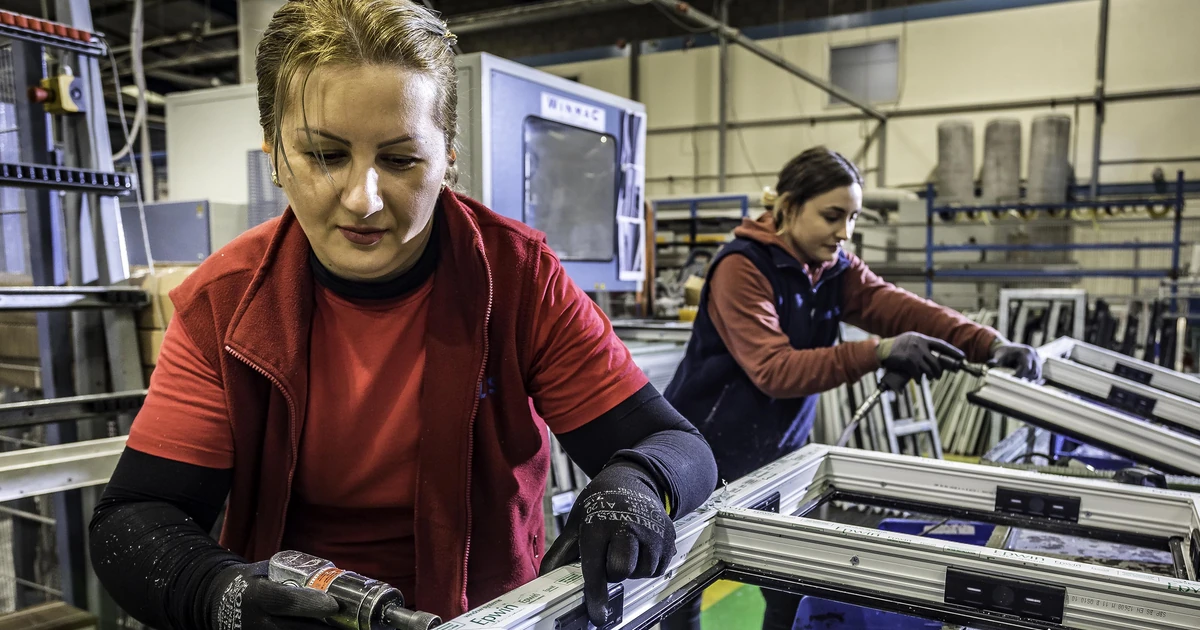
Behind the scenes, specialised tooling monitors the number of screws fitted into hinges and records the torque applied to every installation. The system ensures screws are inserted correctly and at the right tension, reducing the risk of failure while creating a full digital trace for every sash produced.
“A sash falling out of a window can kill or injure a person,” explains Dawid.
“The guns help remove human error and make sure the screw goes in straight at the correct tension to hold the hinge in place. That process also gives us peace of mind, because we can log and trace every screw to every sash in the background.”
With Emplas manufacturing more than 5,000 windows each week, that level of process control delivers not just operational reassurance, but a stronger quality proposition for trade customers.
“The technology has come over from the automotive industry,” Dawid says. “It’s the first time it’s been utilised in the window industry, and it provides Emplas with a real USP because it’s such a significant step forward towards safety and customer quality.”
By using data to anticipate issues, improve processes and support continuous improvement, smarter manufacturing supports better quality, smoother production, improved reliability and a stronger service proposition for Emplas’ trade customers.
As technology marches on, Emplas’ early adoption of digital tools, data analysis and AI will continue to improve consistency, increase efficiency and strengthen service, delivering tangible benefits for customers that extend beyond the manufacturing process.