
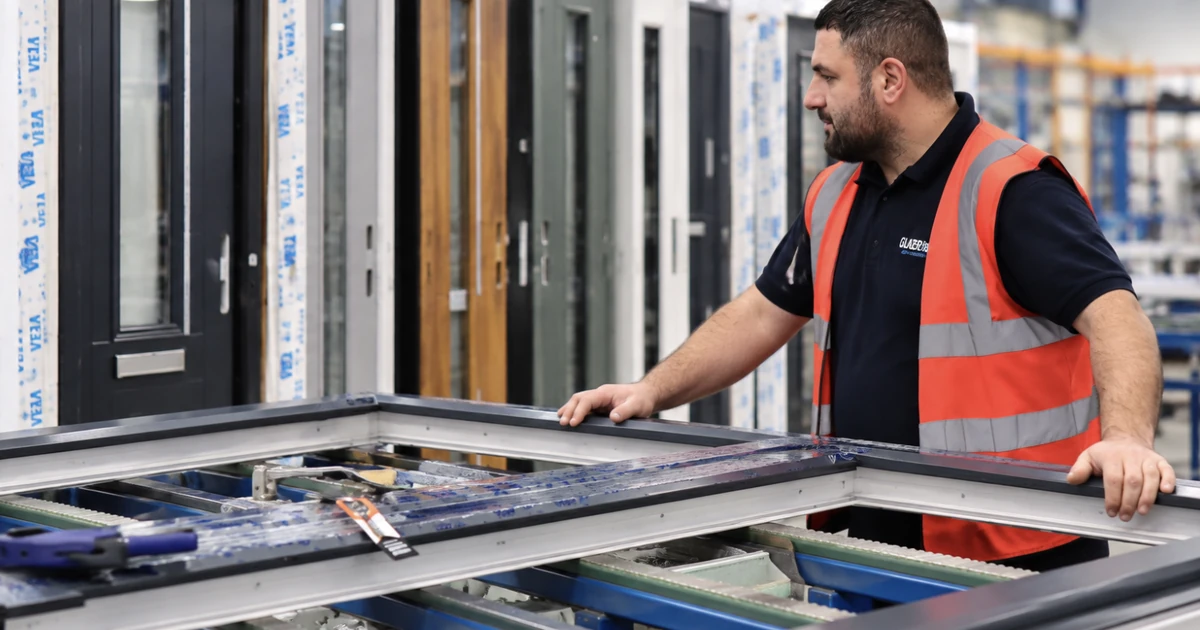
Colour has become a significant part of the window and door market, giving installers a wider range of options to offer homeowners and creating new considerations for fabricators when it comes to manufacturing, stock and product quality.
At Glazerite, data plays a central role in managing that choice.
The fabricator regularly analyses colour ordering patterns across the business, using monthly data to identify trends and inform decisions around the colours it offers customers.
Jeff Dunn, Group Sales & Commercial Director at Glazerite, explains: "We've got so much data coming through the business that we can use it to pre-empt something that could give us a problem further down the line, sometimes months in advance.
"We'll analyse the information, get the key people together and make a group commercial decision about that particular colour or process."
Glazerite reviews monthly colour data from its systems houses to understand how demand is changing. Comparing the figures month by month allows the team to identify colours gaining traction and monitor those experiencing a decline in popularity.
That information can then be considered alongside manufacturing data.
If a particular colour is creating a bottleneck within production, for example, the team can assess its order volumes and manufacturing performance before deciding how it should be managed within the product offering.
Jeff says: "We look at how colour trends are developing and how each option works within our manufacturing processes. That gives us the information to make commercial decisions around lead times and the range we offer."
The same data-led approach extends to components and manufacturing processes.
Non-conformance rates are measured across Glazerite's divisions, giving the business visibility of components that may be affecting production quality. The information can then be reviewed by the relevant teams to determine the appropriate action.
Product quality is also an important consideration when reviewing colour options.
Glazerite assesses how colours perform during manufacturing and the quality of the finished product. Where a particular option creates concerns around cutting or final quality, the business can review its place within the range.
"We've had occasions where colours have been available to the business and we've found them difficult to cut or haven't been happy with the final quality of the product," Jeff explains.
"If we've got anything that jeopardises that final quality, we will pull it."
The data also helps Glazerite look ahead.
When selecting colours for showroom displays at its factories, the business reviews current ordering patterns alongside insight from its systems houses to identify colours with potential for future demand.
This gives the team another way to use the information generated through the business to support conversations with customers about the products and finishes attracting interest in the market.
Jeff says: "If we're doing a showroom at one of our factories, we'll look at the charts and take advice from the systems house about the next popular colour we should be showing our customers, so we're taking them in the right direction for what's going to sell."
With ordering, production and quality data available across the Group, Glazerite can identify trends early and use that information to guide commercial decisions.
For Jeff, having access to that level of information gives the business a clearer picture of how its colour offering is performing and where customer demand could be heading next.
"We analyse the data and bring the key people together to make those decisions," he concludes. "It gives us the information to look ahead and make decisions around colour, processes and quality based on what we're seeing across the business."