
Screw loose?
Multi award winning Emplas has introduced a new screw-counting system across its sash and frame lines, alongside camera-based verification on its fire door production line, as it continues to engineer out errors on the shop floor.
“Can anyone guess how many ways there are to mess up a window in a factory environment? It’s 2,000 ways we have discovered so far, and we discover a new one every week in the factory,” said Nigel Scott, Senior Operations Manager, Emplas.
To tackle that, Emplas has deployed an intelligent screw-driving system which counts every fixing as it is installed, while also monitoring torque to ensure each screw is correctly seated.
“We have a really fancy, expensive screwdriver, if you like, and there are a number of them. It counts the number of screws that go into a sash or into a frame. If that hasn’t counted the right number of screws, it doesn’t allow that window to be scanned forward.”
Integrated into the company’s unique Operating System, the technology links each stage of manufacture to individual operators and defined quality checks. If something isn’t right, the product simply doesn’t move.
The Emplas Operating System adds an additional layer of safety assurance, ensuring that critical components such as hinges are fixed correctly and consistently.
Nigel is clear that the aim is not to catch people out, but to stop problems reaching site.
“I don’t believe anyone comes to work to do a bad job. Unless they are told that they’ve done something wrong, they keep making that mistake, and invariably that mistake will end up with you guys. We want to prevent that from happening.”
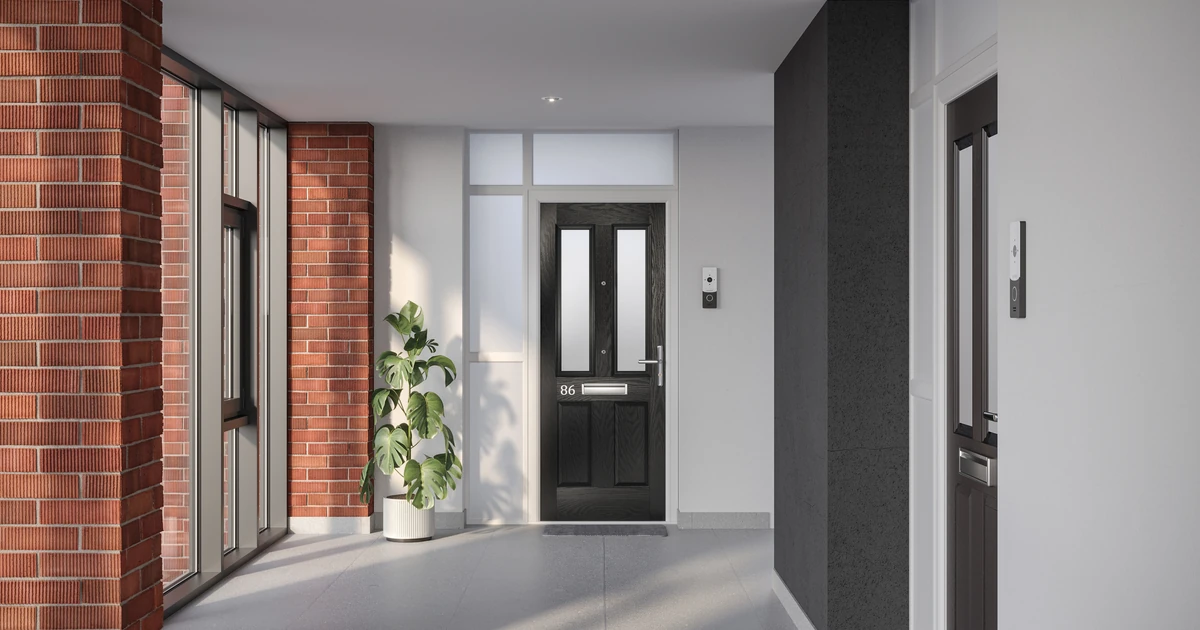
The same thinking is being applied to Emplas’ Fire Doorset, where the consequences of a missed step are significantly higher.
“Intumescent strips go around the locks and sit in the letterboxes. If you miss it, it will fail. If you miss it, the fire or smoke will come through, and it will fail to do its primary job.”
To control that risk, Emplas has installed a dedicated fire door line with camera-based verification.
“Once we put all the intumescent around the product, it will pick up whether it’s present or not. If it stays green, everything’s okay. If it’s red, you cannot move on to the next process. It won’t allow you to scan that product and dispatch it.”
The Fire Doorset has also undergone independent furnace testing at temperatures of around 960°C, significantly exceeding its FD30 requirement.
“By following the system and really building quality in, we went up to a 30-minute fire door. We achieved 58 minutes, and they stopped the test because the guys conducting it ran out of oxygen.
“It really came across for me that we weren’t just making a door anymore. This is a really safe product.”
For more information email