
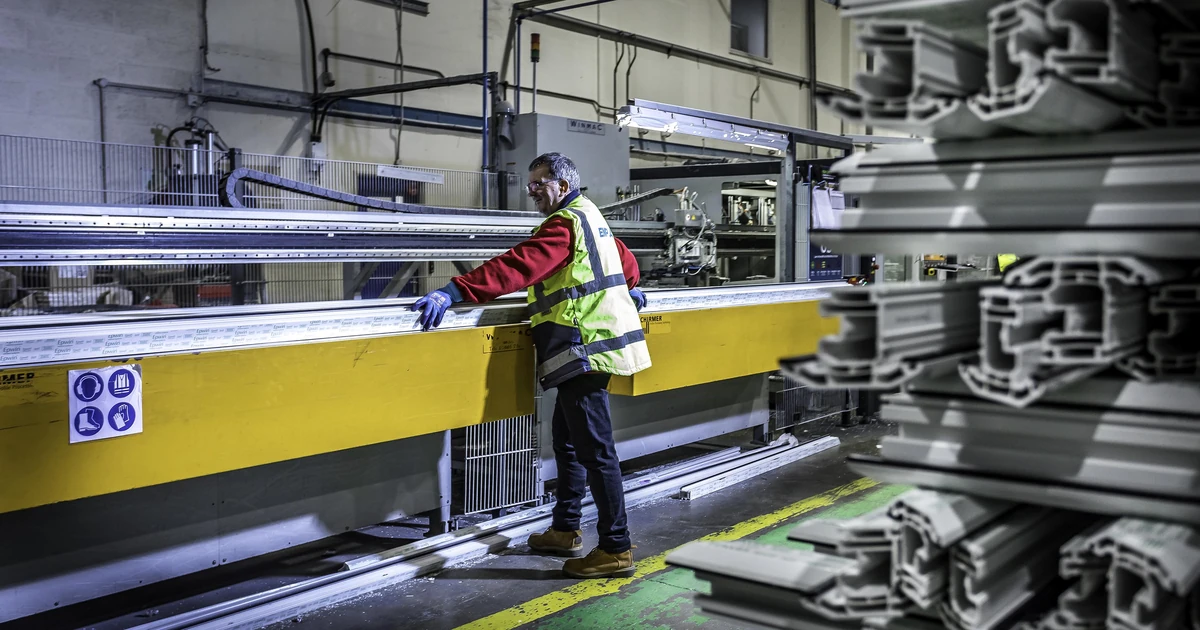
For many fabricators, machinery investment has traditionally meant choosing from a catalogue and hoping the new kit delivers the promised gains, but Emplas is taking a different approach.
Faced with a limited footprint, rising quality expectations and a complex product mix, the company is re‑imagining how it buys, runs and maintains machinery – and using that as a lever to transform product quality and reliability.
At the heart of this shift are three pillars: a new manufacturing design strategy, the introduction of a dedicated Reliability Engineering team, and a suite of live quality‑control systems that turn data into action on the shop floor.
Off‑the‑peg isn’t good enough
Senior Operations Manager, Nigel Scott is candid about where Emplas started: “I’m not from the window industry, and I was surprised to find machines that all did the same thing, no matter what manufacturer I went to. I would describe the options as simply ‘off‑the‑peg machines’.”
But that approach didn’t fit a factory running three shifts in a restricted space, with a complex product range and UK‑specific fabrication demands.
Instead of accepting off the peg machinery, the company turned the model on its head. The multi award winning fabricator has invited engineers from major suppliers into its Wellingborough site to help them understand the real constraints and quality challenges before proposing solutions.
“We’re looking for a partner that is prepared to design the machinery around us. Not the other way around,” explains Nigel
The rise of the Reliability Engineering Team/Department
Changing how you buy machines only works if you also change how you run them. The company has done that by investing “very heavily” in its engineering team.
“The team’s objective is to track breakdowns, and how long it takes to fix them; track to see how long it took to receive the spares and plan the maintenance on the machines,” explains Nigel
The goal is simple: maximise the efficiency, utilisation, and revenue generated from existing machinery, without sacrificing quality.
2,000 ways to go wrong
One of the more striking admissions from Nigel is just how many potential failure modes the company has identified, with the number standing at 2,000.
But rather than shrug and accept it, the company is using it as a roadmap for improvement. The Reliability Engineering Team, machinery suppliers and quality department are all working under the same premise to take those failure modes off the table.
It’s a simple but powerful expression of the company’s new philosophy: don’t rely on someone remembering – design a system that won’t let it pass.
Quality as data
Underpinning the machinery changes is the factory‑wide Emplas Operating System, linking operators, machines and jobs into a single digital thread.
“Information flow is more important than product output on the shop floor,” says Nigel. “There are 375 people working in our factory environment. To ensure that they have the right information to do the right things, at the right time, to deliver a quality product is a challenge.”
Every operator now logs in to their workstation with a unique card. Before they can start, they must complete digital safety checks, creating a time‑stamped, auditable record, followed by quality calibration checks with on‑screen video instructions.
When defects are found downstream, the system sends that information straight back to the operator and process concerned.
Looked at in isolation, an engineer here or a screw‑counting system there might seem incremental. But viewed together, they mark a significant shift in the company’s approach to machinery investment and quality, with positive results for both the company, its staff and its customers.