
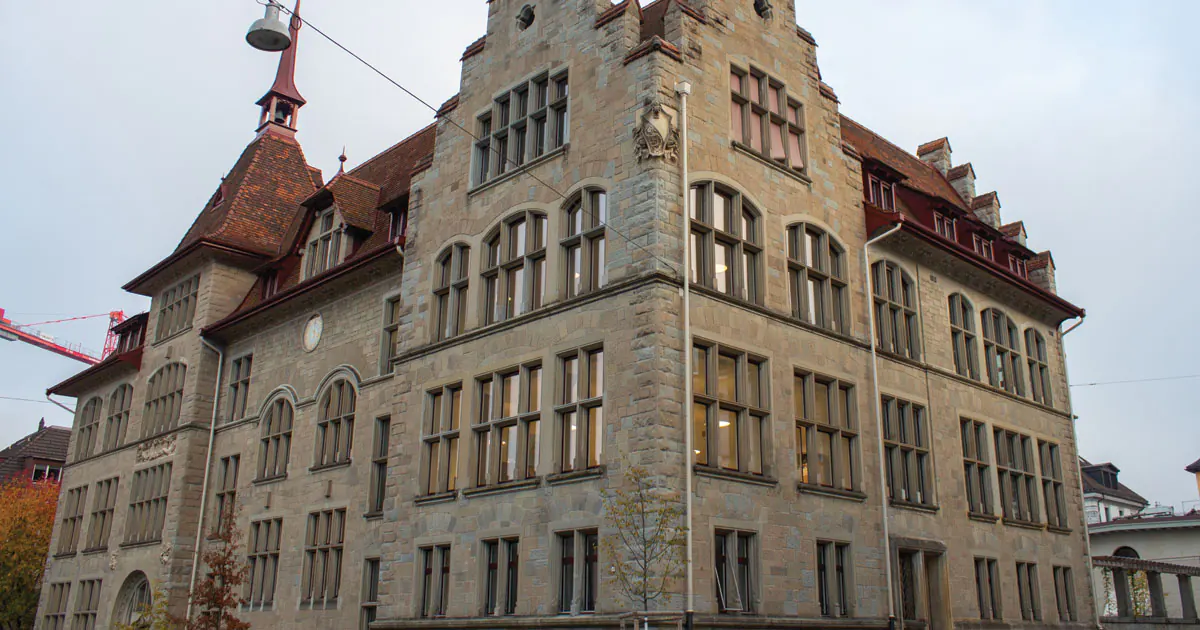
Lavater school complex in Zurich combines energy-efficient refurbishment, architectural heritage and new usage concepts
Through the refurbishment and extension of the Lavater school complex, an important testimony to Zurich’s school architecture has been preserved and updated for future generations. The building ensemble from 1896/97, designed by city architect Gustav Gull in the style of the Swiss National Museum in Zurich, is an excellent example of the sensitive interplay between historic fabric and modern technology. Particular attention was paid to the refurbishment of the historic windows, which were carefully restored in line with heritage requirements by Holzmanufaktur SWISS AG, partner company of Holzmanufaktur Rottweil, specialists in historic timber window restoration – now featuring modern insulating glazing and the high-performance warm edge spacer bar Swisspacer Ultimate in the glazing edge.
The heritage-listed Lavater school complex in Zurich is a historical witness to the change in school building design at the end of the 19th century. In close consultation with the city's monument preservation authorities, the building complex underwent a careful transformation into a modern all-day school and was structurally and energetically refurbished.
In addition to improving the energy efficiency of the building envelope, the renovation concept by the Zurich-based architecture office neff neumann architekten pursued the functional and design-oriented further development of the complex. The school was designed for contemporary day school operations with twelve secondary classes. The former single sports hall was transformed into the “Forum Lavater” – a light-filled dining and multipurpose building – while beneath the schoolyard a new underground double sports hall was constructed, which is also available for club sports outside school hours.
In the historic main building, accessibility, room acoustics and lighting were specifically improved without abandoning the original room structure. The restoration of the architectural qualities from the time of construction played a central role in this. The spatial structure of the classrooms was retained in principle. However, the central zone, which dominates the space with access and sanitary facilities, was given a different design – for example, with ceramic wall surfaces reminiscent of historical elements. Thanks to floor-to-ceiling glazing with wooden frames, the corridor zones and group rooms now receive plenty of light and allow for flexible use – always in keeping with Gustav Gull's clear spatial logic.
The planning also took up the architectural structure of the existing building in the outdoor area. The playground is spatially enclosed by the two historic school buildings and a tree-lined perimeter wall. Three new concrete roofs of varying heights provide a restrained counterpoint to the striking arcade with the school entrance and the asymmetrically placed risalit. The design of the outdoor facilities follows an ecological model with heat-reducing measures, structures that promote biodiversity and an opening of the school grounds to the local community. The concept by neff neumann architekten was awarded first prize in the City of Zurich's selective planning competition in 2017 – a tribute to the architectural precision in dealing with the existing building and its further development.
The school buildings are now powered entirely by renewable sources: a photovoltaic system on the flat roof and a geothermal heat pump cover the entire energy requirement. To improve indoor air quality and temperature, the historic ventilation system in the classrooms was reactivated. Ventilation is provided mechanically in the original ventilation ducts. The high energy efficiency is evident not only in the supply technology, but also in numerous structural details. In particular, the renovation of the windows in line with conservation guidelines is a prime example of the sensitive handling of historical substance and modern technology.
During the restoration of the historic sandstone façade, the original windows were carefully renovated and fitted with new insulating glazing. Automatically controlled fabric awnings provide heat protection in summer. The implementation of the window solutions is a prime example of how energy performance can be combined with historic preservation requirements. The original composite windows were largely retained in their original design, but were technically upgraded. While the historic interior glass could be preserved, modern insulating glazing with Planiclear and ECLAZ ONE coatings was used on the exterior. The high standards for careful installation in the historic building required complex logistics for the installation – including the use of a crane and special transport boxes for the upper windows.
The insulating glass unit achieves a Ug value of 1.4 W/m²K – a balanced value from both a technical and economic point of view. In combination with the Swisspacer Ultimate in the glazing edge, this results in a particularly energy-efficient overall construction. “For a project like Lavater, which is subject to both heritage conservation and energy efficiency requirements, it was important for us to choose a spacer bar that could deliver both technological performance and design restraint. Swisspacer Ultimate impressed us with its excellent Psi-values, its matte, understated appearance and its discreet technical perforation," explains Dirk Obser, project manager at Holzmanufaktur Rottweil. Even the smallest component fits into an overall concept that combines monument protection, sustainability and everyday practicality in a remarkable way.