Most professional window and door installers develop a preference for a particular silicone over time, often based on feel, tooling properties, familiarity, and confidence in a product's performance built through years of hands-on experience.
While many products are labelled as "LMN", there can be significant differences in quality, flexibility and longevity. Understanding those differences can help installers make more informed choices, reduce the risk of remedial work and deliver longer-lasting performance on installations.
What Does LMN Actually Mean?
Within the fenestration industry, LMN is one of the most used silicone types for sealing around uPVC windows and doors. Despite its widespread use, LMN does not represent a specific quality standard or performance grade.
Instead, LMN simply describes the sealant's chemistry and basic characteristics. The abbreviation stands for “Low Modulus Neutral”.
"Low Modulus" refers to the sealant's flexibility. Low modulus silicones can stretch and accommodate movement under relatively low stress, making them particularly suitable for construction joints where thermal expansion and contraction naturally occur.
"Neutral" describes the curing process. Neutral cure silicones produce very little odour and have a greater range of compatibility with construction materials.
For perimeter sealing around window and door frames, selecting an LMN silicone ensures the product possesses the fundamental characteristics required for the application. However, this is only the starting point.
How to Compare LMN Silicones?
Many would assume that if two products are both labelled LMN, their performance will be broadly similar. However, there can be substantial differences between formulations. One of the most effective ways installers can compare products is by examining the UKCA or CE marking information provided on the cartridge.
These markings are a legal requirement and provide valuable information regarding a sealant's tested performance characteristics, including movement capability.
Understanding Movement Capability
Movement capability is one of the most important performance indicators for any glazing silicone, as construction materials naturally expand and contract as temperatures fluctuate throughout the year.
Window frames, masonry and cladding systems all move at different rates, creating stress within the sealant joint. The sealant's job is to absorb that movement while maintaining adhesion.
25LM: The Highest Performance Classification
Premium LMN silicones typically achieve a 25LM movement classification, meaning they can accommodate movement of up to ±25% of the original joint width.
This increased flexibility offers several practical benefits:
High Flexibility - Greater ability to accommodate thermal movement.
Greater Adhesion – Flexibility reduces stress on the bond line.
Longevity - Improved resistance to cracking and joint failure.
Products in this category also tend to contain higher levels of silicone content, which contributes to lower shrinkage during curing and improved tooling characteristics during application.
12.5E: Mid-Range Performance
Another commonly encountered classification is 12.5E, indicating the product can accommodate movement of up to ±12.5%. While still suitable for many sealing applications, these products offer only half the movement capability of a 25LM sealant.
For this reason, a 12.5E sealant is not recommended for larger window installations. Over time, reduced flexibility generates stress within the joint, increasing the likelihood of adhesion loss and/or cracking compared to higher-performance alternatives.
Unclassified and Lower Movement Products
Below 12.5E are products with a 7.5% movement class, along with many silicones that carry no movement classification at all. Where no movement class is stated, the sealant will generally have a movement capability below the threshold required for formal classification. These products often contain a higher proportion of fillers relative to silicone content.
The Impact of Low Silicone Content
Silicone content plays a significant role in determining long-term performance. As filler levels increase, flexibility tends to decrease. Higher filler content can also lead to greater shrinkage during curing, which may compromise the integrity of the seal over time.
Potential consequences include:
- Reduced flexibility
- Increased shrinkage
- Loss of adhesion
- Cracking
For installers, these issues can result in costly and time-consuming callbacks. No professional wants to return to a completed project to remove and replace failed perimeter seals. Selecting the correct sealant specification from the outset remains one of the simplest ways to minimise that risk.
Choosing the right silicone
When assessing the difference between LMN silicones, it is always recommended for installers to review the UKCA or CE marking. Key information to look out for within the marking is the term “‘25LM”.
Confirming the movement class enables installers to make a true like-for-like comparisons between products labelled as an ‘LMN’, ensuring they would achieve the same level of performance.
Silirub Neutral Low Modulus Silicones
Soudal has developed a tiered offering within the Silirub range, providing installers a selection of low modulus neutral (LMN) silicones to meet a wide variety of application requirements and budgets.
Silirub 2 and Silirub LMN represent the company's highest-performing low modulus neutral cure sealants.
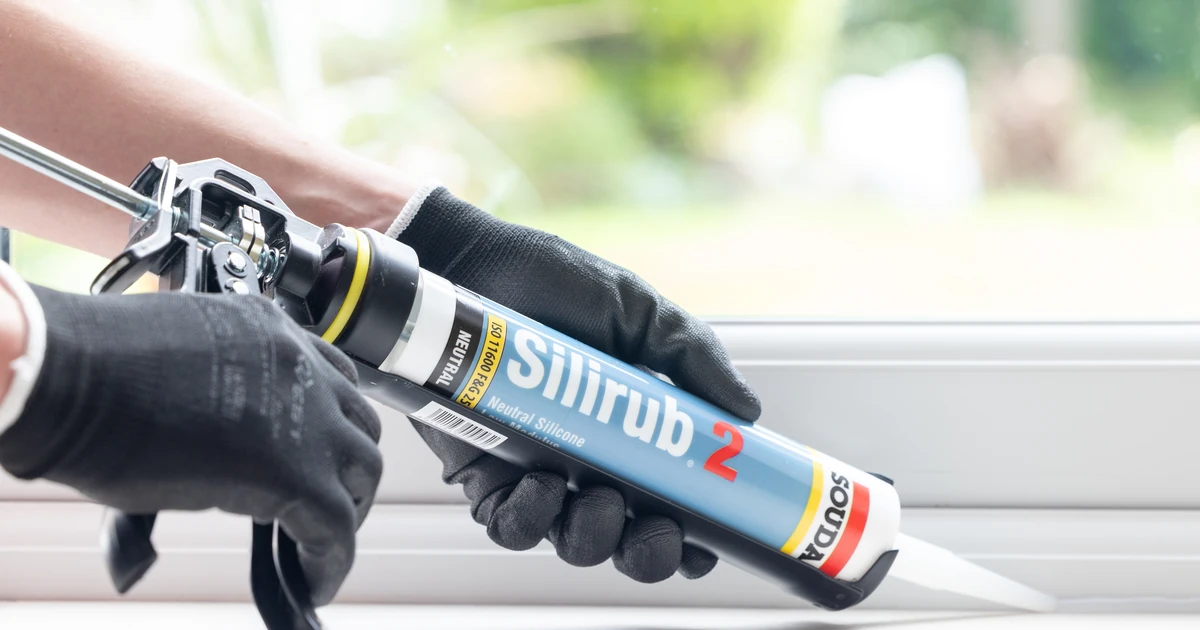
Silirub 2 is a 100% silicone formulation containing no fillers or solvents. This makes it one of the few silicones suitable for use in contact with insulated glass units (IGUs), while also delivering excellent movement capability (25LM) and no shrinkage.
Silirub LMN offers the same high levels of flexibility and also carries a 25LM movement classification, allowing it to comfortably accommodate the thermal movement experienced throughout the seasons.
In Summary
For installers, the key takeaway is simple: not all LMN silicones perform to the same standard. The term ‘LMN’ confirms the sealant is marketed as a low modulus neutral cure product, but it does not indicate its quality level, silicone content or movement capability.
By taking a moment to review the UKCA or CE classification on the cartridge, installers can quickly determine whether they are comparing equivalent products and make a more informed purchasing decision.
Ultimately, when long-term durability and performance is the priority, specifying a sealant with a 25LM movement capability provides greater confidence that the seal will continue performing throughout the life of the installation.