
For installers, the price paid for a frame or glass unit is only one part of its true cost.
Buying the two separately may deliver a saving on paper, but it also means placing and managing two orders, coordinating two supply chains and carrying the risk when products do not arrive together or match the correct specification.
If one element is late, damaged or incorrect, the window cannot be installed. The result can be lost fitting time, another visit to site, a disrupted homeowner relationship and a delay in completing the job and getting paid.
“Buying frames and glass separately can look like the cheaper option if you are comparing the unit price alone,” says Nigel Scott, Senior Operations Manager at Emplas.
“But you also have to account for the time spent placing and checking separate orders, coordinating deliveries and dealing with any problems. Once those costs are included, the calculation can look very different.”
That is why the value of a complete glazed frame is not just convenience, but one order, one delivery and one clear point of responsibility.
The disruption caused by a missing or incorrectly specified glass unit can extend well beyond the cost of a remake. Fitting schedules may need to be rearranged, homeowners kept informed, and installation teams sent back to jobs they should already have completed.
There can also be uncertainty over responsibility, with the installer left to determine whether the issue sits with the frame supplier, the glass supplier or the information provided when the orders were placed.
“A relatively small problem can have a disproportionate impact,” Nigel continues. “If the frame is ready but the glass is not, the job still cannot be completed.
“That affects productivity, cash flow and the relationship the installer has with the homeowner. It also creates additional administration at a time when most installation businesses are already trying to do more with fewer resources.”
Buying complete glazed frames allows more of that work to be handled by the fabricator.
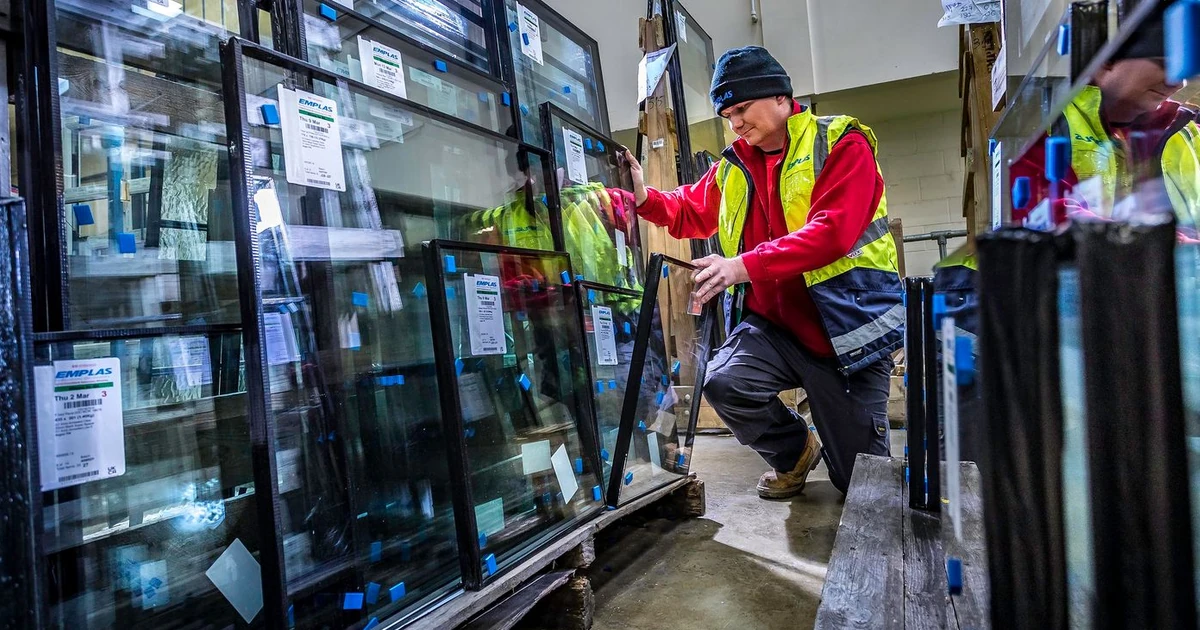
At Emplas, frames are brought together with glazed units manufactured through Padiham Glass (part of Emplas Group), allowing the finished window or door to be specified, checked and delivered as a complete product.
“Factory glazing means we can check that the correct glass has been used, that it has been fitted properly and that the complete product meets the required specification before it reaches site,” Nigel says.
“Quality should be built into each stage of manufacture, rather than relying on a final inspection to identify a mistake. Supplying the product glazed gives us visibility and control over the complete process.”
This is supported by EVA, Emplas’s online customer platform, which aligns the frame and glass specification within a single order.
That becomes particularly important where products need to meet specific thermal, security or regulatory requirements. Rather than relying on information being transferred between separate suppliers, the relevant specification and product data are held together.
It also creates a clearer audit trail – something Nigel argues will become increasingly valuable as the industry places greater emphasis on product information and evidence of performance.
Since January 2026, Pilkington has supplied the raw glass used by Emplas. This is then processed and manufactured into completed units through Padiham Glass before being incorporated into Emplas’s glazed windows and doors.
More than six months into the partnership, Emplas says it has delivered improvements in quality, service and price for installers. Pilkington is also celebrating its 200th anniversary in 2026 and is widely recognised by consumers, giving installers a familiar glass brand to reinforce homeowner confidence during the sale.
The operational benefits continue through to delivery. Rather than receiving frames and glass separately and then finding the space and time to match them together, installers receive a complete product ready for installation.
Emplas’s real-time delivery tracking provides additional visibility, helping customers plan labour, storage and fitting schedules around what is arriving.
Nigel concludes: “One order, one delivery and one point of responsibility removes a significant amount of work and uncertainty for the installer.
“When the correct product arrives complete and ready to fit, installers protect productivity, cash flow and homeowner satisfaction by spending less time coordinating suppliers and more time completing jobs.”