
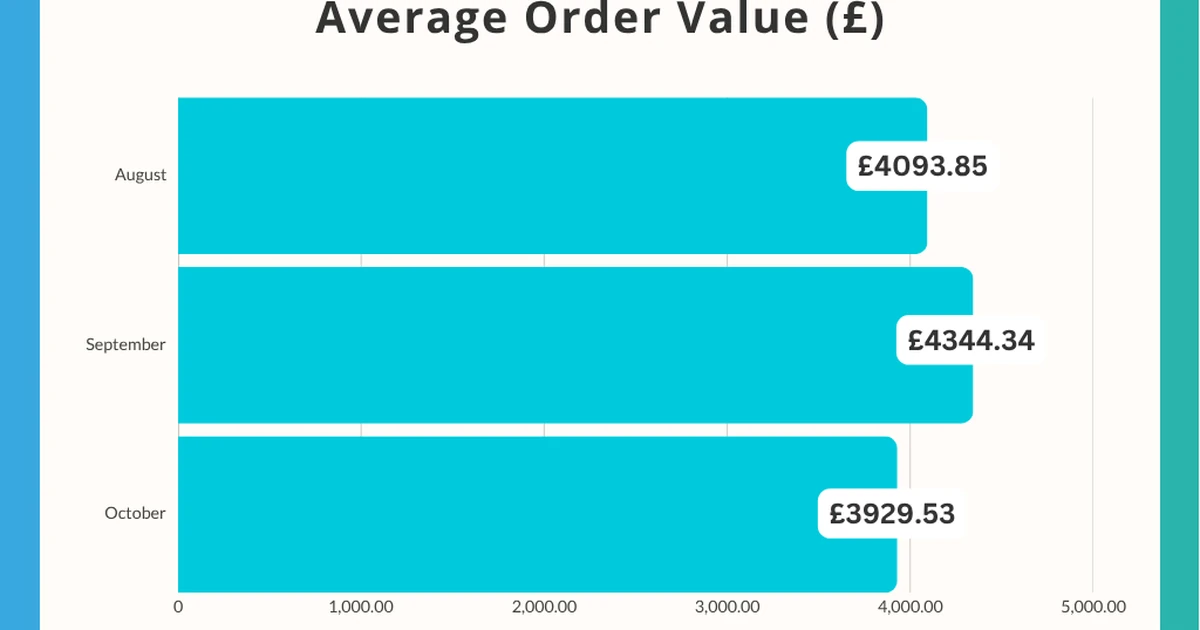
October's figures suggest a more measured pace of activity as the window and door retail market moves further into the final quarter of the year. Lead and sales volumes have eased following September's rebound, while average order values have fallen back from their recent high. Conversion rates, however, remain above 40%, and shorter lead times suggest installers are continuing to manage workloads effectively.
September's Barometer highlighted renewed momentum following the summer slowdown, with stronger leads, sales and order values supported by consistent conversion performance. October's data suggests that some of this activity has moderated, although the underlying picture remains relatively stable across several key measures.
Lead volumes fell from 113.3 in September to 109.0 in October, a reduction of almost 4% month-on-month. Despite this easing, enquiries remain comfortably ahead of August's figure of 99.5, suggesting that the market has retained some of the momentum gained as homeowners returned to their usual routines after the summer.
Sales activity followed a similar pattern, falling from 53.5 in September to 51.8 in October, a reduction of just over 3%. The smaller movement in sales compared with leads suggests installers are continuing to make effective use of the opportunities entering their pipelines.
Conversion rates also remained broadly stable, moving from 40.9% in September to 40.2% in October. Although this represents a reduction of 0.7 percentage points, conversion has now remained above 40% for four consecutive months. This consistency suggests installers are maintaining a relatively strong level of sales effectiveness despite fluctuations in enquiry volumes.
The most significant change came in average order values, which fell from £4,344 in September to £3,930 in October. This represents a reduction of approximately 9.5% month-on-month and brings average project values below August's figure of £4,094.
The movement suggests a change in the value of projects progressing to order, following several months of improvement. Homeowners may be adjusting the scale of planned improvements or prioritising more manageable projects as household spending pressures continue to influence purchasing decisions. For installers, this places greater importance on understanding the value and profitability of the work being secured.
Lead times, meanwhile, shortened from 23.8 days in September to 22.5 days in October, a reduction of 1.3 days. This is the shortest average recorded across the latest three-month period and suggests businesses have some flexibility to respond to changing workloads as activity settles.
Taken together, October's figures suggest that activity has settled following September's rebound. Lead and sales volumes remain above August's levels, conversion performance continues to hold above 40%, and lead times have shortened. The reduction in average order value is the clearest area for installers to monitor, particularly as businesses assess the balance between sales volumes, project values and profitability.
The wider economic backdrop continues to place pressure on household spending. UK CPI inflation increased to 3.5% in September, up from 3.1% in August, with higher transport costs, particularly motor fuels, contributing to the rise. The renewed increase in inflation adds to the financial considerations facing homeowners when planning discretionary improvements.
The Bank of England maintained Bank Rate at 3.75% at its September meeting, with policymakers continuing to assess the impact of higher energy costs and persistent inflationary pressures. These conditions are likely to remain an important influence on consumer borrowing and confidence as the year draws to a close.
Consumer sentiment has also weakened. The GfK Consumer Confidence Index fell to -24 in October, following September's reading of -13. This change suggests households are becoming more cautious about their financial outlook, potentially affecting the timing and scale of larger home improvement projects.
For the home improvement sector, October's figures reflect a market where opportunities remain available, although purchasing decisions may be becoming more considered. The continued stability in conversion rates is encouraging, while the reduction in average order values reinforces the importance of maintaining a healthy balance between securing work and protecting margins.
For installers, the priority will be understanding which enquiries are most likely to progress, monitoring changes in project values and ensuring that sales activity continues to translate into profitable work. With household budgets under pressure, effective follow-up, clear communication and careful management of the sales pipeline will remain essential.
This is where Business Pilot continues to provide valuable support. By giving installers real-time visibility across leads, conversions, order values and operational performance, it enables businesses to identify changing patterns quickly, respond effectively to new opportunities and make informed decisions based on their own data.
As the sector moves towards the end of 2026, October's figures suggest a period of consolidation following September's stronger activity. With conversion rates remaining above 40% and lead times shortening, installers have a stable operational base from which to respond to changing demand. Maintaining visibility over project values and profitability will be particularly important as businesses prepare for the final weeks of the trading year.
About Business Pilot
Business Pilot is a powerful CRM, which mobilises the power of cloud-based technologies, to give installers complete visibility of each and every element of their operation from leads and conversions to job scheduling, cost of installation, service calls, and financial reporting.
Accessible across all devices, from desktop to phone, it supports installers in running their businesses more profitably.